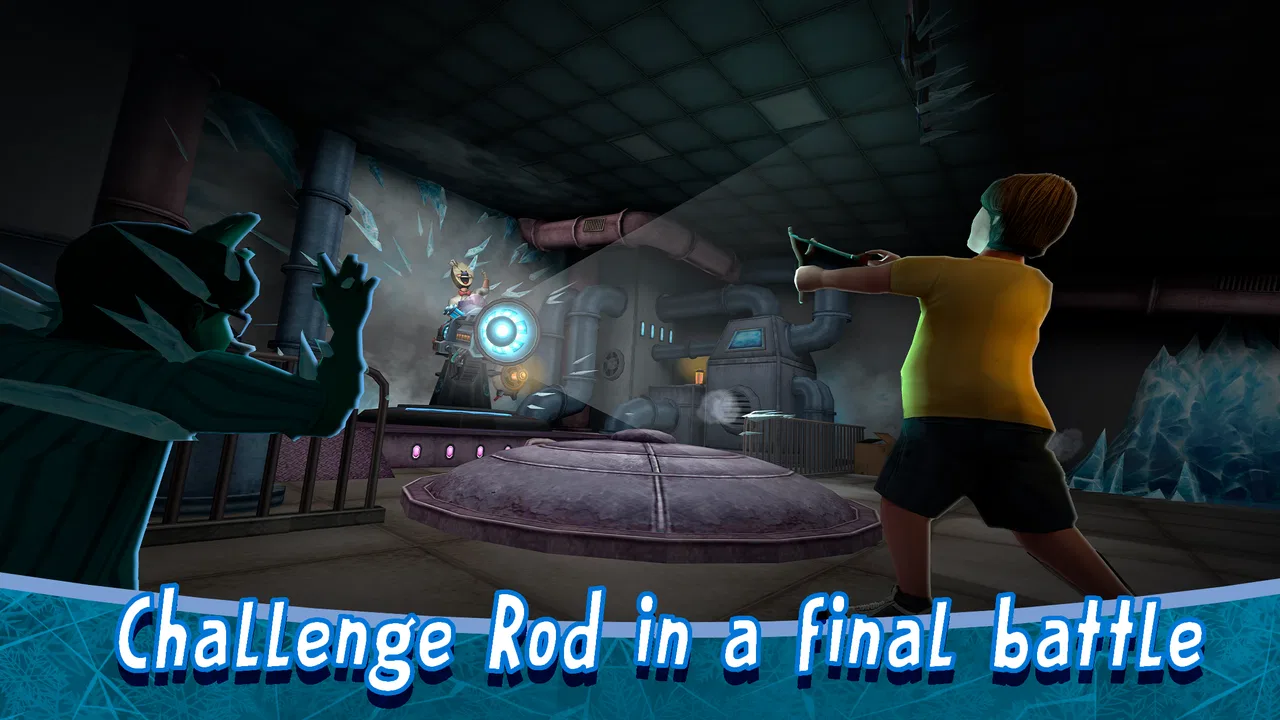
Ice Scream 8: Final Chapter
- 4.6
- Rating
- 10.00M
- Installs
- Free
- Price

 Analysis by App-foxy
I approached Ice Scream 8: Final Chapter as the closing arcade-horror trip through Rod’s factory, expecting a game that would rely as much on timing and attention as on its creepy setting. Developed by Keplerians Horror Games, it is free to start, aimed at a Teen audience, and available on Android devices running version 7.0 or later. My overall impression is that it works best as a focused, short-session horror game: easy to pick up, tense enough to keep me alert, and more demanding when several objectives compete for my attention.
The central appeal is simple to understand. I return to the factory, explore its dangerous spaces, solve problems, and try to put an end to Rod’s plans. That premise gives the game a clear sense of purpose instead of making each level feel like a disconnected arcade challenge. It also makes the final-chapter framing important: newcomers can still enjoy the immediate chase-and-escape tension, while returning players have a stronger reason to see the story through.
How the factory feels in actual play
I find the factory’s strongest moments come from balancing curiosity with caution: a quiet stretch gives me time to read the space, while a sudden threat makes every remembered doorway more useful. That contrast is what separates this arcade-horror adventure from a score-first game, and it shapes how I approach the next part: making a steady start without rushing past clues.
You May Also Like

 Blood Strike: 2.5 Anniversary
Blood Strike’s Loadouts Turn Every Drop Into a Tactical Gamble
A close look at Blood Strike’s custom loadouts: how fast access to signature weapons reshapes its battle royale rhythm, rewards preparation, and narrows the gap between fights.

 Pandora - Music & Podcasts
Pandora’s Music Is Easy to Start, but Harder to Recover
Pandora’s strength is its low-effort path from a seed to a station. Its weak spot is how much confidence it asks you to place in connection, setup, and quiet recovery.

 8 Ball Pool
 Is Built on Rivalries, Rematches, and Routine
A close look at the rivalries, rematches, shared routines, and unanswered safety questions that turn a quick pool match into a persistent mobile community.

 Samsung Music
’s Quiet Strength Is Playing What You Already Own
Its reach comes less from spectacle than from dependable access to a personal library. That simplicity is both the app’s strongest retention engine and its ceiling.

 AccuWeather: Weather Radar
AccuWeather Review: A Quick, Clear Forecast for Everyday Decisions
For everyday plans, the best forecast is the one you can understand quickly. AccuWeather makes rain timing, radar, and local conditions easy to act on, with a few trade-offs.

 Hill Climb Racing
Why Hill Climb Racing Still Turns Crashes Into One More Run
A tiny car, a bumpy hill and one more upgrade: Hill Climb Racing keeps resurfacing because its simple chaos makes every near-miss feel personal.
More From Our News Desk



Quick starts, but not always quick progress
The game is easy to launch into when I have only a little time. A brief play session can still deliver exploration, a close call, or a small breakthrough. That makes it more convenient than a long-form adventure that demands an uninterrupted evening. The controls and objectives are designed around direct interaction, so I do not need to learn a complicated ruleset before the tension begins.
However, the perceived speed changes once I reach a section that requires careful searching. Moving through the factory is not simply a matter of running from one marker to the next. I have to notice useful objects, remember where I saw a blocked route, and decide whether it is safe to investigate a suspicious area. The game can feel fast during pursuit and deliberately slow during problem-solving, which is a good contrast for horror but may frustrate anyone expecting constant action.
One practical tip made a noticeable difference in my sessions: I stopped treating every room as a place to clear immediately. Instead, I mentally grouped locations by purpose and remembered unusual doors, objects, and routes. That reduced aimless backtracking and helped me react faster when the pressure increased. It is a small habit, but it matters in a game where panic can make a familiar area feel confusing.
The factory’s layout also affects how quickly I feel I am progressing. A player who explores patiently will usually get more from the atmosphere and story context, while a player who rushes may reach danger without understanding the available escape options. I prefer the patient approach, especially on a first attempt. On later tries, revisiting known areas becomes less about discovery and more about improving decisions.
Where performance pressure is most noticeable
The heaviest moments are not necessarily the longest ones. A chase, a sudden threat, or a section where I need to interact quickly can make the experience feel much more demanding than quiet exploration. These are the moments when I notice whether my device responds comfortably and whether I can keep track of the environment without distractions.
For that reason, I would not judge the game only by its opening minutes. Early exploration can feel light, but later sequences place more pressure on both the player and the device. If I play with several apps open in the background, the experience is less predictable than when I begin with a clean session. Closing unused apps before starting is sensible, particularly on an older phone, even though the game’s minimum Android requirement is relatively accessible.
Another useful approach is to play in shorter attempts rather than forcing a long session after repeated mistakes. Horror games become mentally tiring when I am constantly watching for danger, and fatigue leads to careless movement. A short break often improves my next run more than immediately repeating the same section. This is especially helpful when I am stuck on a route or puzzle and keep making the same assumption.
Resource demand is also connected to screen brightness, sound, and how long I play continuously. I keep the volume high enough to follow the atmosphere, but I avoid playing while the phone is already warm or low on battery. That is not a special feature of this title; it is simply the most comfortable way to handle a tense mobile game. A cooler, less crowded device gives me a better chance of noticing quick changes and responding without hesitation.
Stability and recovering from mistakes
My preferred quality in this type of game is reliable recovery. A scary moment is enjoyable when failure teaches me something, but it becomes tiring if I lose too much progress or have to repeat a long stretch without understanding what went wrong. Ice Scream 8: Final Chapter is most enjoyable when I treat each failed attempt as information: which route was unsafe, which action took too long, and where I should prepare before moving forward.
I recommend checking the game’s current version before beginning a serious playthrough. The current release is 2.2.15, so keeping the installed copy up to date is the sensible starting point for anyone concerned about stability. I would also avoid switching repeatedly between demanding apps during a tense section. Mobile games can be affected by the wider condition of the device, and a little preparation makes recovery from interruptions less annoying.
When I make a mistake, I try not to repeat the entire sequence automatically. I first identify whether the problem was speed, poor observation, or an incorrect assumption about the environment. That distinction is valuable here. If I simply move faster, I may fail again because the real issue was missing an object or entering an area without a plan. The game rewards remembering details more than blindly retrying.
The recovery experience is also better when I keep my own mental notes. I remember which areas are likely to require a return visit and which paths are useful for escape. This turns the factory from a confusing maze into a set of manageable decisions. It is one of the less obvious strengths of the game: the tension does not rely only on surprise, but also on how well I build a working map in my head.
What kind of phone is a sensible match?
The broad Android compatibility is helpful. With a minimum requirement of Android 7.0, the game is not restricted to only the newest devices. Still, minimum compatibility should not be confused with an identical experience on every phone. Screen size, available memory, thermal condition, and general age can all affect how comfortable a fast horror sequence feels.
On a newer or well-maintained device, I would expect the best chance of smooth interaction during busy moments. On an older phone, I would be more cautious about long sessions, background apps, and playing while the device is already under strain. If a player mainly wants a calm puzzle experience, these limitations may be tolerable. If the goal is immediate reaction during pursuit, a stronger device is the better choice.
This is also a game I would play with headphones only when the phone and surroundings are suitable. Sound can make a horror game more immersive, but it can also make a sudden interruption or notification more disruptive. I prefer enabling a quiet environment, silencing unnecessary alerts, and keeping enough battery for a complete session. Those small choices improve the experience more than chasing maximum visual settings would.
Storage and installation habits are worth considering in a practical way, too. I would leave enough free space for the game and its normal operation rather than installing it on a phone that is already nearly full. I cannot promise that every device will behave identically, but reducing obvious device pressure is a sensible precaution. Players who regularly experience slowdowns in other games should test this one during a short session before committing to a longer playthrough.
iPhone users should remember that this particular compatibility detail is expressed through the Android requirement, while the game itself is also presented as a mobile title for iOS. In either case, the useful question is not simply whether the store page allows installation; it is whether the phone remains responsive during the busiest parts. That is where hardware age and background activity matter most.
Free entry and the cost of continuing
The game is free, which makes it easy for me to recommend trying before deciding whether the full experience suits me. Optional purchases range from $0.99 to $59.99 per item, so I would approach the payment side carefully, especially if a younger player is using the device. The Teen content rating is another reason parents should check the game’s atmosphere and intensity before handing it to a child.
I do not think the free entry changes the core decision. If I enjoy tense exploration, learning routes, and repeating a section to improve, the download is worth testing. If I dislike being chased, searching through unfamiliar spaces, or retrying after mistakes, no purchase is likely to solve that basic mismatch. I would play the free portion naturally first and avoid buying anything simply because I was impatient with a difficult moment.
Compared with a traditional arcade game built around instant restarts and score chasing, this one asks for more attention and memory. Compared with a larger mobile horror adventure, it feels easier to approach in short sessions and more clearly focused on the factory and Rod’s plans. A pure puzzle game may be a better choice for someone who wants no pursuit pressure, while a competitive arcade title will suit players who care more about scores than atmosphere. This game sits between those options, using arcade accessibility with horror tension and exploration.
Who will enjoy it, and who should skip it?
I think it is a strong fit for players who like mobile horror that can be played in manageable bursts. Fans of the Ice Scream setting will have the clearest reason to continue, since the final-chapter premise gives the factory a sense of conclusion. New players can still appreciate the immediate objective and danger, but they may get more emotional value from the story if they already know the broader context.
It is also suitable for someone who enjoys learning from failure. The best moments for me came when I remembered a route, recognized a useful detail, and escaped because of that knowledge. That kind of satisfaction is different from winning through reflex alone. Players who want a game that explains every next step clearly may find the searching less comfortable.
I would skip it if I want a completely relaxed experience, a bright visual style, or a game that can be played without sound and still feel identical. I would also hesitate to recommend it to someone using a very old or heavily burdened phone for long sessions. The Android minimum is approachable, but the most demanding sequences are still better suited to a device that responds consistently.
My practical way to play
For a first session, I would set aside enough time to learn the factory rather than immediately trying to finish a section. I keep track of locked areas, unusual objects, and routes that look useful for retreat. When I find myself wandering, I stop and review what I already know instead of opening every possible path at random.
During a chase, I prioritize a clear escape route over collecting every nearby item. Exploration can wait; survival usually cannot. Once the danger passes, I return with a more deliberate plan. This trade-off is easy to overlook, but it prevents me from turning a tense sequence into a frantic search through several rooms.
I also recommend taking screenshots or brief personal notes only when they do not interrupt play. A simple reminder about an area or objective can save time later, but relying too heavily on external notes can reduce the satisfaction of solving the factory naturally. I use them as a memory aid, not as a substitute for paying attention.
My performance verdict
Ice Scream 8: Final Chapter feels most convincing when its speed, atmosphere, and recovery loop work together. Quiet sections give me time to observe, dangerous sections demand quick decisions, and failed attempts become useful when I learn the environment. The experience is not designed to be effortless, but that friction is part of its identity rather than an accidental inconvenience.
Its popularity is understandable: it has a 4.6 average from around 79 thousand ratings and has passed 10 million installs. Those figures suggest a large audience has found the formula appealing, but they do not remove the personal question of whether horror chases and factory exploration are right for me. I would treat them as encouragement to try, not as a guarantee of perfect performance on every phone.
My final recommendation is positive, with sensible expectations. I would download it for a focused arcade-horror experience, prepare the device before longer sessions, and give myself time to learn the routes instead of judging it after one rushed attempt. The free price makes that trial easy, while the Teen rating and optional purchases call for a little awareness. If you enjoy tense exploration more than effortless action, this is a worthwhile final visit to Rod’s factory.
FAQs for Ice Scream 8: Final Chapter
01What is Ice Scream 8: Final Chapter about?
Ice Scream 8: Final Chapter is a horror-adventure game in which you face Rod, the sinister ice-cream seller, and attempt to end his terrifying story. The game combines exploration, puzzle solving, stealth, and chase sequences. You move through unsettling environments, search for useful objects, solve environmental challenges, and uncover more details about the characters and the events behind the series.
02Is Ice Scream 8: Final Chapter suitable for children?
Although the game uses cartoon-style graphics, it is built around horror, suspense, frightening encounters, and scenes involving danger. Some moments may be intense for younger players or people who are sensitive to jump scares and threatening characters. Parents should check the age rating available in their region and consider whether their child is comfortable with spooky gameplay before downloading it.
03How does the gameplay work in Ice Scream 8: Final Chapter?
The main gameplay involves exploring locations, collecting items, examining clues, completing puzzles, and avoiding enemies while progressing through the story. You need to pay attention to your surroundings because important objects can be hidden in unexpected places. The game rewards patience and observation, while difficulty settings can make the experience more approachable or more challenging.
04Can Ice Scream 8: Final Chapter be played offline?
The game is primarily designed as a single-player experience, and much of the core adventure can generally be enjoyed without an active internet connection after installation. However, connection requirements may vary depending on the platform, version, advertisements, updates, or optional services. It is best to launch the game once online and verify its current offline behavior on your device.
05Is Ice Scream 8: Final Chapter free to download?
Ice Scream 8: Final Chapter may be available as a free download on supported Android and iOS stores, although availability, advertising, and optional in-app purchases can differ by region and platform. Before installing, check the official store listing for the current price, permissions, storage requirements, supported operating-system version, and purchase information to avoid unexpected limitations.
Pros
- Strong atmosphere with detailed locations and creepy sound design.
- Puzzles offer varied challenges instead of relying only on item collection.
- Multiple characters add variety and keep the story moving.
- Checkpoints make progress less frustrating after difficult sections.
- Works well for players who enjoy story-driven horror adventures.
Cons
- Some puzzles can feel unclear without experimenting with several items.
- Chase sequences may become repetitive after multiple attempts.
- The horror relies more on suspense than genuinely frightening moments.
- Higher difficulty can make progress slow for younger players.
- Ads or in-app purchases may interrupt the free gameplay experience.

Ice Scream 8: Final Chapter
Gallery